

Launch of the 2nd Interventional Pulmonology Institute (IPI) of the World Association for Bronchology and Interventional Pulmonology (WABIP) in Nairobi, Kenya
The second Interventional Pulmonology Institute (IPI) of the World Association for Bronchology and Interventional Pulmonology (WABIP) has been officially inaugurated in Nairobi, Kenya.
For further details, please visit: WABIP Interventional Pulmonology Institute
Interventional Pulmonology is a rapidly expanding specialty that plays a critical role in the diagnosis and treatment of nearly all respiratory conditions. Across Africa, the burden of respiratory disease remains substantial and uniquely diverse, encompassing infections such as tuberculosis and aspergillosis, as well as autoimmune diseases and malignancies. These challenges are compounded by systemic constraints common in many low- and middle-income countries, including healthcare inequities, a limited number of trained subspecialists, and insufficient access to essential equipment and supplies.
Kenya exemplifies these challenges. The country has fewer than 40 trained pulmonologists serving a population of over 50 million people, with less than a quarter having specialized training in advanced bronchoscopy. This shortage is further driven by the lack of accredited fellowship training programs on the continent. As a result, fewer than five centers across East Africa are capable of performing key procedures such as endobronchial ultrasound or rigid bronchoscopy, and only one center in East and Central Africa currently performs complex bronchoscopic interventions such as navigation bronchoscopy or airway stenting.
In response to this critical gap, WABIP continues its mission to expand global capacity through the development of training centers and structured fellowship programs. The pioneering Interventional Pulmonology Institute in Istanbul has successfully trained eight fellows annually from around the world. Building on this success, WABIP, in partnership with Avenue Hospital in Nairobi, has now launched the second IPI—IPI Nairobi. This institute will begin its fellowship training program in January 2027 and is designed to serve physicians not only from across Africa but from developing countries worldwide.
The program will be led by Professor Ali Musani, President-elect of WABIP and Chair of the IPI programs globally, alongside Dr. Naveed Merali, Director of IPI Nairobi and a graduate of the IPI Istanbul program. Together with an international faculty, they will provide both local and international trainees with comprehensive theoretical knowledge and hands-on experience in advanced diagnostic and therapeutic bronchoscopy within high-volume, state-of-the-art training centers in Nairobi. The overarching goal is to expand access to high-quality respiratory care and improve outcomes for underserved populations worldwide.
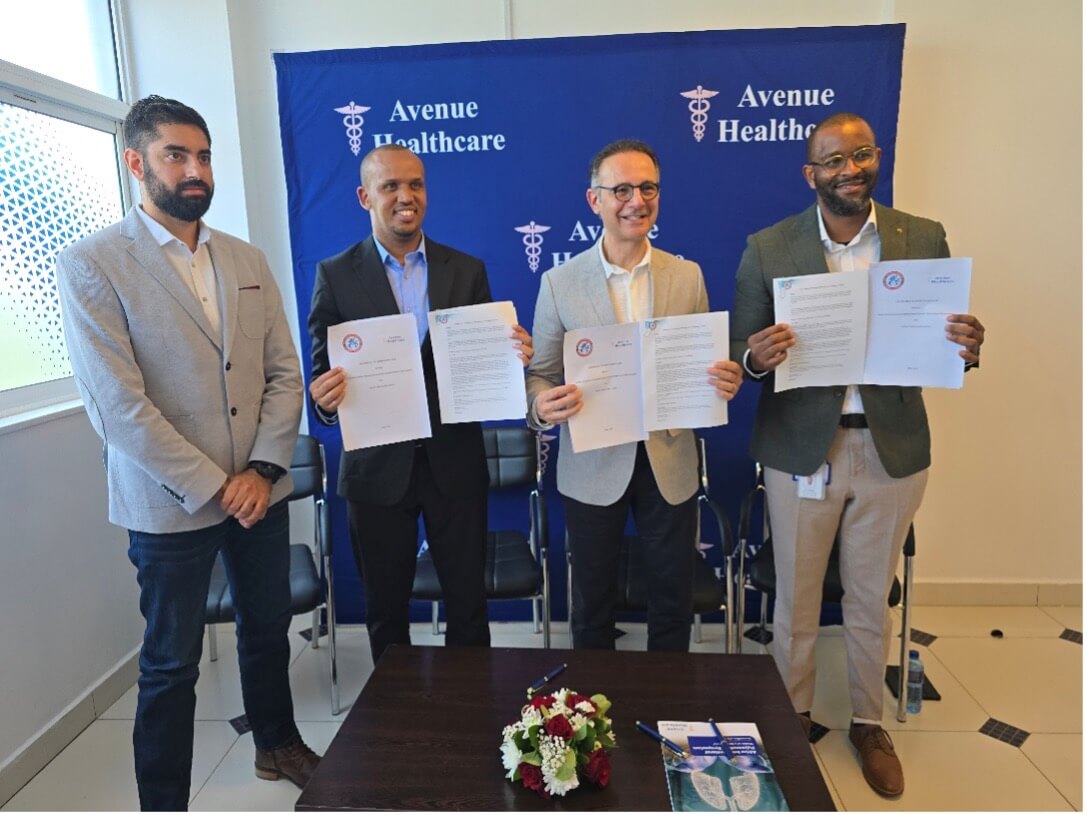
From left: Dr. Naveed Merali (Head of the Department of Pulmonology, Avenue Hospital), Dr. Mohameed Said (CMO, Avenue Hospital), Prof. Ali Musani (President-elect WABIP and Chair IPI), and Mr. Eric Ochieng (COO, Avenue Hospital), with a signed MOU to start the fellowship program.
Fellowship Announcement
This inauguration also marks the official announcement of the Interventional Pulmonology fellowship at IPI Nairobi. Pulmonologists and thoracic surgeons from around the world are invited to apply for the WABIP-IPI fellowship program beginning in January 2027. Applicants are encouraged to carefully review the fellowship requirements and curriculum available on the WABIP website and complete the application forms provided online. Completed applications should be submitted at https://www.wabip.com/institute/apply-ipi.

Applications for all four quarters of the 2027 academic year must be received no later than June 30, 2026. The selection committee will respond in a timely manner to allow successful applicants sufficient time to make travel arrangements. The institute will provide official letters of acceptance to assist with the visa application process for Kenya. Fellows must not engage in employment or any unauthorized activities during their stay in Kenya under the fellowship visa, and IPI will cooperate fully with legal authorities if required.
Education and Training
The fellowship is structured as an intensive three-month program, with one to two fellows beginning training every three months. Fellows are required to reside in Nairobi for the full duration of the program and will work closely with both local and visiting international faculty affiliated with WABIP. Training will take place across multiple institutions, including Kenyatta National Hospital, providing broad exposure to a wide range of procedures and patient populations.
Participants will receive limited malpractice coverage through Avenue Hospital and will be granted a temporary trainee license by the Kenya Medical Practitioners and Dentists Council, allowing them to perform procedures under supervision. The training schedule will involve six working days per week, including Saturdays.
Candidates from outside East Africa are required to have their credentials verified through ECFMG/EPIC as part of the licensing process, which is mandatory. Detailed instructions regarding licensing requirements, associated fees, and documentation will be provided to all accepted candidates.
To support learning, IPI will provide access to an online textbook of interventional pulmonology, a structured reading list, a comprehensive library of procedural videos, and additional review materials. Fellows are expected to complete all pre-fellowship study materials prior to arrival. Each participant will undergo an initial assessment of theoretical knowledge and procedural skills; this pretest is intended solely to measure progress and will not be used in the selection process. At the conclusion of the program, fellows will have the opportunity to pursue elective rotations at other centers in Europe or Africa upon request.
Fees, Expenses, and Visa Requirements
The IPI fellowship does not charge tuition fees; however, fellows are responsible for all personal expenses, including travel, accommodation, and daily living costs during their three-month stay in Nairobi. While WABIP is actively seeking funding to support scholarships for selected candidates, such financial assistance will be limited, particularly in the initial phase of the program.
All fellows are required to obtain valid health insurance coverage in Kenya prior to the start of training, and proof of insurance must be provided. Participants are strongly encouraged to seek financial support through their home institutions, government programs, or external grants, and IPI will provide supporting documentation to facilitate these applications when needed.
For visa processing, IPI will issue an official letter of acceptance to assist fellows in obtaining the appropriate Kenyan visa. Applicants are advised to begin the visa application process at least four months in advance of their intended start date. In parallel, candidates must complete registration with the Kenya Medical Practitioners Council, including submission of required documentation and payment of applicable fees. Detailed guidance will be provided upon acceptance into the program.
Certification
At the conclusion of the three-month training period, each fellow will undergo a comprehensive evaluation during the final week, consisting of both didactic and procedural skills assessments. Fellows must successfully pass both components to receive a certificate of completion from the WABIP-IPI program.
It is important to emphasize that this certification reflects successful completion of a structured training program but does not confer independent licensure to perform interventional pulmonology procedures in any country. Graduates must still meet the credentialing and licensing requirements of their respective institutions and national regulatory bodies. Given the condensed nature of the program, full procedural independence cannot be guaranteed, and additional supervised training is strongly recommended before performing these procedures independently.
Code of Conduct
All fellows are expected to adhere to the professional standards, policies, and code of conduct of the participating hospitals throughout their training, both in clinical settings and in their personal interactions. The IPI leadership reserves the right to dismiss any fellow who fails to comply with institutional rules or engages in disruptive or inappropriate behavior. In such cases, the fellow will be required to return to their home country within two weeks and will not be eligible for certification.
IPI also maintains a strict policy regarding legal compliance. Any involvement in unauthorized employment or illegal activities will be reported to the appropriate authorities, and legal action may be taken if necessary.
Conclusion
The Interventional Pulmonology Institute in Nairobi represents a major step forward in addressing global disparities in respiratory healthcare. Through this initiative, WABIP aims not only to provide high-quality training, but also to foster long-term mentorship, collaboration, and professional development. Fellows will leave the program equipped with a strong foundation upon which to build their careers, with the ultimate goal of establishing and expanding interventional pulmonology services in their home countries.
Our commitment extends beyond the duration of the fellowship, as we continue to support our trainees through ongoing mentorship, educational opportunities, and professional guidance. Together, we aim to elevate the standard of care and train future generations of physicians dedicated to improving respiratory health worldwide.
Sincerely,
Interventional Pulmonology Institute Committee
The World Association for Bronchology and Interventional Pulmonology


